
- 1
- 1
- 1
- 2
Himachal Pradesh
Welcome to Himachal Pradesh — India’s Mountain Paradise
Himachal Pradesh is one of India’s most magnificent and diverse Himalayan states — a land of snow-capped peaks, emerald valleys, ancient monasteries, colonial hill stations, and roaring glacier-fed rivers that draws travellers of every kind — from honeymooning couples and family vacationers to solo trekkers, adventure seekers, and spiritual pilgrims. Stretching from the subtropical foothills to the stark, high-altitude deserts of Lahaul and Spiti, Himachal is a state of extraordinary contrasts. The apple orchards of Shimla give way to the glacier-fed Beas River at Manali, and the lush Kangra Valley opens into the remote, moon-like landscapes of Spiti Valley. From the charming colonial legacy of Shimla — India’s former summer capital — to the vibrant Buddhist culture of Dharamshala and McLeod Ganj, the dramatic high-altitude passes of Rohtang and Kunzum, and the world-class paragliding destination of Bir Billing, every corner of Himachal tells a different and extraordinary story. Our Himachal Pradesh tour packages are crafted to help you experience the full magic of this Himalayan paradise — with comfort, deep local expertise, and carefully curated itineraries for every kind of traveller.
Top Places to Visit in Himachal Pradesh
- Shimla — The Queen of Hill Stations: India’s most iconic hill station and the state capital of Himachal Pradesh, Shimla sits at 2,205 metres and exudes timeless colonial charm. The bustling Mall Road, the historic Christ Church, panoramic views from Jakhu Hill, the UNESCO World Heritage Kalka-Shimla Toy Train, and the vibrant Lakkar Bazaar are essential Shimla experiences. It is also the perfect base for excursions to Kufri, Naldehra, and Chail.
- Manali — The Adventure Capital of the North: Set in the Kullu Valley at 2,050 metres along the Beas River, Manali is Himachal’s most celebrated destination. The ancient Hadimba Devi Temple, the Solang Valley for skiing and snow activities, the dramatic Rohtang Pass, and the Vashisht hot springs are iconic Manali landmarks. Manali is also the starting point for the legendary Leh-Manali Highway — one of the world’s most thrilling and scenic road journeys.
- Spiti Valley — The Middle Land: One of India’s most remote and spectacular high-altitude cold deserts, Spiti Valley sits at an average elevation of 3,800 metres. The ancient Key Monastery, the village of Kibber — one of the world’s highest motorable villages, the dramatically perched Dhankar Monastery, the pristine Chandratal Lake, and the Pin Valley National Park make Spiti an extraordinary destination for adventure travellers and Buddhist heritage seekers
- Dharamshala & McLeod Ganj — Little Lhasa: Home to His Holiness the Dalai Lama and the Tibetan Government-in-Exile, Dharamshala and its upper town McLeod Ganj are the cultural heart of Tibetan Buddhism in India. The Tsuglagkhang Complex, Namgyal Monastery, the Bhagsu Waterfall, and the popular Triund trek above McLeod Ganj attract spiritual seekers, yoga practitioners, and trekkers from around the world.
- Kullu Valley — The Valley of Gods: The Kullu Valley, stretching along the Beas River, is renowned for its apple orchards, ancient temples, river rafting, and the spectacular Kullu Dussehra festival — one of India’s most famous and vibrant regional festivals. The Great Himalayan National Park — a UNESCO World Heritage Site — lies within the valley and is a premier haven for trekkers and wildlife enthusiasts.
- Dalhousie & Khajjiar — The Scotland of India: Dalhousie is a serene colonial hill station at 2,036 metres, offering breathtaking views of the Pir Panjal and Dhauladhar ranges. Nearby Khajjiar — a lush, circular meadow framed by dense cedar forest and a small lake — is called the ‘Switzerland of India’ and is one of the most charming and photogenic day-trip destinations in all of Himachal.
- Bir Billing — The Paragliding Capital of Asia: Bir Billing is internationally recognised as one of the world’s premier paragliding destinations and has hosted the Paragliding World Cup. Set in the Kangra Valley, this peaceful Tibetan settlement combines thrilling air sports with meditation retreats and Buddhist monasteries — equally appealing to adrenaline seekers and mindful travellers.
- Kasol & Parvati Valley — The Himalayan Backpacker Trail: Nestled in the Parvati Valley along the Parvati River, Kasol is the base for trekkers heading to Kheerganga, Pin Parvati Pass, and Malana. With natural hot springs at Kheerganga, stunning pine-forested trails, and a vibrant backpacker culture, the Parvati Valley is one of India’s most beloved off-beat trekking and camping destinations.
Best Time to Visit Himachal Pradesh
- March–June (Spring & Early Summer): The most popular season overall — apple blossoms carpet the Shimla and Kullu valleys, rhododendrons bloom across the forests, and the weather across Shimla, Manali, Dharamshala, and Dalhousie is pleasantly cool and clear. Rohtang Pass typically opens in May, unlocking access to Lahaul and Spiti. Ideal for families, honeymooners, and first-time Himachal visitors.
- July–September (Summer & Monsoon): June is peak season for Manali, Shimla, and Kasol. Monsoon arrives in July, bringing lush greenery to the lower valleys, though some mountain roads can face landslide disruptions. Spiti Valley — a high-altitude rain-shadow desert — remains dry and fully accessible, making July to September the best window for the Spiti and Lahaul circuit.
- September–November (Autumn): An excellent shoulder season with clear skies, vibrant post-monsoon landscapes, and far fewer crowds. The Kullu Dussehra festival in October is one of India’s most spectacular cultural events. Trekking routes like Hampta Pass, Beas Kund, and Chandrakhani Pass are at their most rewarding in autumn. Spiti and Lahaul begin closing for winter from late October.
- December–February (Winter): The season for snow lovers and skiing enthusiasts — Shimla, Kufri, Manali, Dalhousie, and Dharamshala receive heavy snowfall. Solang Valley near Manali is the top spot for skiing, snow tubing, and snowboarding. Spiti and Lahaul are largely cut off by snow. A magical winter escape for those seeking white Himalayan landscapes and peaceful off-season hill station retreats.
How to Reach Himachal Pradesh
- By Air: Kullu-Manali Airport (Bhuntar Airport) near Kullu is the closest airport to Manali, with daily direct flights from Delhi. Gaggal Airport in Kangra district serves Dharamshala and McLeod Ganj. Shimla Airport (Jubbarhatti) has limited scheduled flights from Delhi. Chandigarh International Airport is the most well-connected and recommended entry point for road journeys to Shimla, Manali, and Dalhousie.
- By Train: The Kalka-Shimla Narrow Gauge Railway — a UNESCO World Heritage Site — is one of India’s most scenic and historic rail journeys. Kalka, Chandigarh, Pathankot, and Una are the main railheads at the foothills, well-connected to Delhi, Mumbai, and other major cities. From these junctions, travellers continue onward by road to their Himachal destinations.
- By Road: Himachal Pradesh is excellently connected by road from Delhi and other northern cities. Shimla is 370 km from Delhi (NH 5), Manali is 540 km, Dharamshala is 480 km, and Dalhousie is 560 km. HRTC Volvo buses and private luxury coaches operate comfortable overnight services from Delhi’s ISBT Kashmere Gate to Shimla, Manali, and Dharamshala.
Browse our Himachal Pradesh tour packages — covering Shimla-Manali honeymoon packages, Spiti Valley road trips, family hill station holidays, adventure and trekking expeditions to Hampta Pass and Beas Kund, Bir Billing paragliding tours, and custom Dharamshala wellness and meditation retreats — all designed for a seamless, deeply enriching, and unforgettable journey through India’s most beautiful and diverse mountain state.
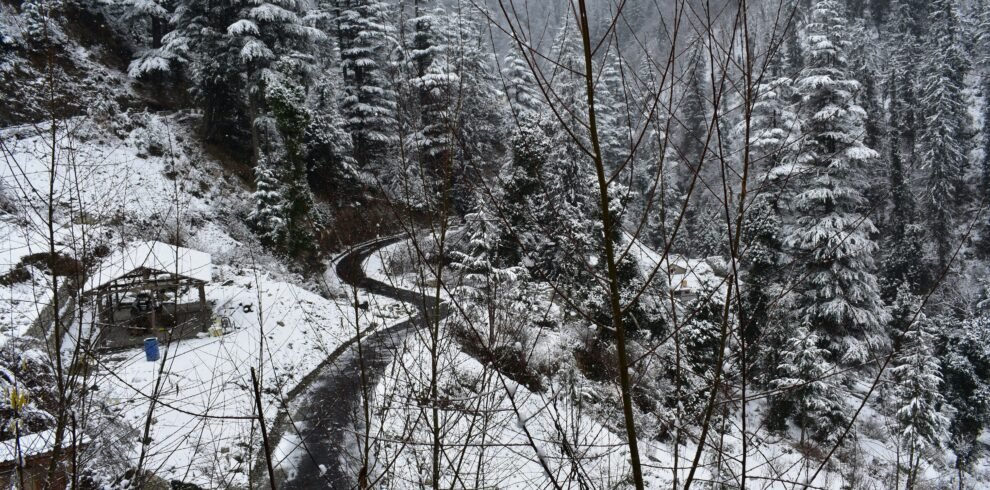
Tirthan Valley Shimla package for 8 nights 9 days. UNESCO GHNP, Kasol hot springs, Manali adventure and Shimla heritage in one complete Himachal circuit. Book...
Duration
9 Days
₹46,500
Next Departures
April 8, 2026 (Available)April 9, 2026 (Available)April 10, 2026 (Available)